Photoshop and the Concerns it Brings
How Photoshop Disrupted Expertise
Photoshop and the Concerns it Brings
To understand the danger Photoshop introduced, it is important to look back to a time when photographs were widely accepted as reliable evidence and symbols of credibility. Before digital editing technology existed, altering a photograph required advanced darkroom techniques performed by trained professionals.
The equipment and expertise needed for photographic manipulation were expensive and inaccessible to most people, which limited the ability to alter images on a large scale. Because of this, photographs carried an authority that made them trustworthy in journalism, science, advertising, and even legal settings. Images were commonly viewed as direct representations of reality rather than constructed interpretations.
That perception began to change in 1987, when Thomas and John Knoll created Photoshop, which was officially released by Adobe in 1990. Photoshop transformed image editing by allowing users to manipulate photographs at the pixel level on a personal computer. With a few tools, individuals could remove imperfections, alter appearances, and completely reshape the meaning of an image.
What once required specialized knowledge, expensive equipment, and extensive time could now be done quickly and accessibly. Photoshop therefore marked a major turning point in visual culture, challenging the long-standing belief that photographs could automatically be trusted as objective evidence.
The World Photoshop Disrupted
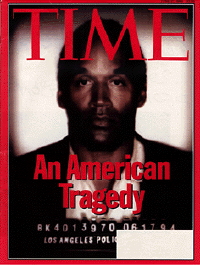
OJ Simpson's darkened mugshot
What actually happened after the release?
Following its release, Photoshop generated both excitement and unease. Businesses, advertisers, artists, and media companies immediately recognized its creative potential. The software opened possibilities for artistic expression and commercial design unlike anything before it.
However, alongside this innovation came growing ethical concerns surrounding authenticity and manipulation. Journalists, photographers, and media scholars began questioning whether digitally altered images could still be considered truthful representations of reality.
One of the earliest and most controversial examples occurred in 1994, when Time Magazine digitally altered O.J. Simpson’s mugshot for its cover. The edited image darkened Simpson’s skin tone and created a more dramatic and threatening appearance. The controversy sparked public debate about the ethics of digital manipulation and raised questions about the difference between documentation and distortion. Critics argued that Photoshop did not simply enhance photographs but had the power to reshape public perception itself. This moment demonstrated that even in Photoshop’s early years, society already recognized the tension between creativity and credibility.
As Photoshop became increasingly available to the public, its influence expanded rapidly across media and culture. The software disrupted traditional forms of photographic expertise by making advanced editing accessible to ordinary users rather than only trained professionals.
At the same time, it also created new forms of expertise centered around digital editing and visual manipulation. Social media platforms, fashion industries, and advertising campaigns normalized the editing of appearances to the point where altered images became an everyday expectation. Gradually, people learned not to immediately trust what they saw online or in print.
Trust broken
This cultural shift fundamentally changed the relationship between society and photography. Terms such as “photoshopped” or “PS’ed” became common phrases used to question whether an image was genuine. Digital manipulation no longer appeared rare or shocking; instead, skepticism toward images became normalized.
Media theorists and critics increasingly warned that Photoshop weakened the credibility photography once possessed. As digital forensics expert Hany Farid explained, “Seeing is no longer believing.” His statement captures how Photoshop disrupted the historical assumption that photographs represented reality. Rather than serving as unquestioned evidence, images became objects of suspicion and interpretation.
Today’s World: Photoshops Dangerous Advancements
The long-term effects of Photoshop are even more relevant today with the rise of artificial intelligence. Modern AI tools, including deepfake technology, represent a more advanced version of the same issue Photoshop first introduced decades ago.
AI can now generate realistic photographs, videos, and audio recordings that appear entirely authentic despite being fabricated. Similar to the public reaction to Photoshop in the 1990s, these technologies have created both excitement and fear.
While AI offers powerful opportunities for creativity and innovation, it also intensifies concerns surrounding misinformation, deception, and the collapse of visual trust.
What changed Forever
Ultimately, Photoshop reshaped society’s understanding of images and credibility. It democratized digital editing and expanded creative possibilities, but it also weakened the automatic authority photographs once carried.
The release of Photoshop marked the beginning of a cultural shift in which images could no longer be accepted as unquestionable truth. Today, as AI-generated media becomes increasingly advanced, the same concerns continue to evolve. The debate is no longer simply about whether an image has been edited, but whether visual evidence itself can still be trusted in a digital world.
Before and After
Artificial intelligence is changing how people create, edit, and trust digital images.
How I Used AI for This Essay
This essay was researched and written with the assistance of OpenAI and NotebookLM.
AI was useful for: Gathering relevant sources through NotebookLM, and the ability to tie in and relate those sources to the material presented in class.
Help structure the essay, bounce ideas off each other and be able to combine all researched materials into one centralized text with smooth transitions.
AI was not a reliable source for the details of the essay. I had to keep putting in new prompts such as “elaborate more on the expertise disruption due to Photoshop”, or “focus less on giving me an entire history of photoshop and more on how it disrupted trust.” Ai was also not as reliable when gathering a large group of source at once, some of the sources did not have as much relevance as I would’ve liked it to.
How I overcame these challenges and navigated the assignment
AI is something that, for the most part, you control how precise the output is. It was extremely helpful to give you a general idea and scaffold of the essay. However, you must revise the contents, whether manually or by inputing precise commands and prompts. Ai is the future, and we must learn how to both correctly and efficiently use it in our work. —
Bibliography
Adobe Communications Team. “Photoshop: Changing Your Photo, Changing an Industry.” The Adobe Blog, 6 Dec. 2017.
Batley, Abigail, and Richard Glithro. “Exploring the Synergy of AI Generative Fill in Photoshop and the Creative Design Process Utilising Informal Learning.” 26th International Conference on Engineering and Product Design Education, 5-6 Sept. 2024.
Berry, Ellie. “Chapter 2: The Politics Representation and National Geographic.” Ellie Berry, 14 May 2020.
Campbell, David. The InTegrITy of The Image: Current Practices and Accepted Standards Relating to the Manipulation of Still Images in Photojournalism and Documentary Photography. World Press Photo Academy, Nov. 2014.
Clipping World. “History of Photoshop: Evolution, Origins & Version Timeline.” Clipping World, 1 Feb. 2026.
Evans, Mathew D., et al. “Using Creativity and Imagination to Understand our Algorithmic World: a Conversation with Dr. Ed Finn.” TechTrends, 31 May 2019, https://doi.org/10.1007/s11528-019-00404-3
Gawman, Paul. “From Photoshop to Generative AI: The Evolution of Image Manipulation.” Paul Gawman, 2025.
Gupta, Vipin. “Deepfake and the Crisis of Trust in Digital Public Spheres.” International Journal of Social Science Research, vol. 2, no. 2, Mar.-Apr. 2025, pp. 329-40.
Jiang, Harry H., et al. “How Professional Visual Artists are Negotiating Generative AI in the Workplace.” Extended Abstracts of the 2026 CHI Conference on Human Factors in Computing Systems, 13-17 Apr. 2026, https://doi.org/10.1145/3772363.3799003
Karthikeyan, S., and Anindita Roy. “Digital Trust in the Age of Deepfakes and Synthetic Media.” Journal of Cyber Risk and Digital Trust, vol. 1, no. 2, May-Aug. 2025, pp. 43-49.
Lind, Douglas M. “Photo Manipulation and its Effect on Future Credibility of Documentary Photojournalism.” Master’s thesis, Utah State University, May 1993.
Parsons, Andy. “Authenticity in the Age of AI: Growing Content Credentials Momentum Across Social Media Platforms, AI Companies and Rising Consumer Awareness.” The Adobe Blog, 18 Sept. 2024, https://blog.adobe.com
PRO EDU. “The Evolution of Photoshop: From Basic Editing to AI Integration - A Visual Revolution.” PRO EDU Blog, 22 Nov. 2024.
Smith, Andrew, and James Hutson. “Satirical Deepfakes, Surreal Dreamscapes & Nostalgic Pixels: The Rapid Evolution and Cultural Commentary of AI-Aesthetics.” ISAR Journal of Arts, Humanities and Social Sciences, vol. 2, no. 9, Sept. 2024, pp. 31-43.
Swift, Ian P., and Debaleena Chattopadhyay. “A Value-Oriented Investigation of Photoshop’s Generative Fill.” arXiv, last revised 6 May 2024, https://doi.org/10.48550/arXiv.2404.17781
Zhou, ShengDong, et al. “The Impact of Artificial Intelligence on the Evolution of Graphic Design: Current Practices and Challenges.” Premier Journal of Science, vol. 14, 31 Oct. 2025, https://doi.org/10.70389/PJS.100151